
An e-commerce SEO audit reviews your store’s technical setup, on-page elements, and content structure to spot where search engines lose interest in your pages.
Think of it as lifting the hood on your store’s search performance. This includes things like missing meta tags, broken links, and how well your product and category pages are set up.
On most e-commerce sites, problems like slow pages, duplicate descriptions, and unindexed categories don’t show up alone. They tend to stack up, each one dragging rankings down in its own way.
Usually, website SEO audit services go through your site methodically, so every fix is backed by data rather than guesswork.
What Is an E-commerce SEO Audit?

An e-commerce SEO audit is basically a full check-up of your site. It looks at everything search engines pay attention to when deciding where you should rank. That includes your technical setup, meta tags, internal links, and even the gaps in your product and category page content.
Each layer builds on the one before it. If your technical SEO has unresolved issues, search engines can’t crawl your e-commerce website properly, and on-page work won’t do much until that’s sorted.
Google’s documentation on how search works points to technical setup, on-page signals, and internal linking as the core ranking signals. Backlinks then build on top of that by signalling trust and authority.
Bottom Line: A good SEO audit works through each layer in sequence. That way, nothing gets missed, and every fix builds on the last.
Technical SEO on E-commerce Sites: Core Web Vitals and Broken Links
Technical SEO is where most e-commerce audits start, and for good reason. One overlooked template issue can bring down hundreds of product and category pages at once. And the culprits are almost always the same ones.
What Slows E-Commerce Sites Down
Page speed is usually the first issue a technical SEO audit surfaces on e-commerce sites.
In audits we’ve run, bloated code and uncompressed images come up almost every time. Both hurt core web vitals scores, and once those drop below Google’s “good” rating (LCP under 2.5 seconds, INP under 200ms, and CLS under 0.1), rankings start slipping.”
Low core web vitals scores push product pages down in search results. And poor mobile friendliness makes that worse since Google uses mobile performance as a primary ranking signal.
How Crawl Errors Affect Product Visibility
Search engine bots rely on internal links to find and index your pages. When those links are broken, entire product pages can drop out of search results without any warning. However, a technical SEO audit identifies where those crawl errors sit and which pages need attention first.
Product Pages and Category Optimization: The Real Work Begins

Product and category pages are where most e-commerce SEO wins and losses happen. Most store owners we talk to have never touched their category pages, and that gap tends to show up quickly in rankings.
Here’s what an audit covers on both.
- Target Keywords and On-Page Content: Product pages need target keywords in the title, headers, and body copy. Search engines read those signals to understand what the page is about, and pages that skip this step rarely rank for the terms they should.
- Meta Descriptions and Missing Meta Tags: A surprising number of product and category pages go live with no meta tags at all. Though meta descriptions don’t directly affect rankings, they do influence click-through rates.
- Structured Data and Key Product Details: Structured data helps search engines pull key product details like price, availability, and reviews directly into search results. Most e-commerce stores skip structured data entirely, which means less information shows up in search results and fewer clicks overall.
- Category Page Structure: Multiple product pages under an unoptimized category page lose internal linking value. Without proper optimization, category pages can’t tell search engines what the store section is about, which drags down every product page sitting beneath it.
When you get these right, search engines have a clear, consistent picture of what each page sells and who it’s for. Just make sure duplicate content isn’t undoing that work.
Can Duplicate Content Hurt Your E-commerce Website?
Yes, duplicate content on e-commerce sites does hurt rankings. When multiple pages carry identical content, search algorithms struggle to decide which version to rank. You end up with two weak pages splitting the same ranking potential (like two salespeople pitching the same client, neither one wins).
Usually, the duplicate content that e-commerce sites deal with comes from product descriptions copied across multiple pages. And category pages with the same filtered content under different URLs are just as common.
Over time, both have split the domain authority across pages that should be consolidating it. What’s more, your best product pages end up ranking lower than they should, simply because duplicate content is pulling their ranking power in two directions.
We recommend a follow-up SEO audit a few months after the first one, as that’s typically where remaining duplicate content issues get resolved.
Google Search Console and Free SEO Tools: What to Use
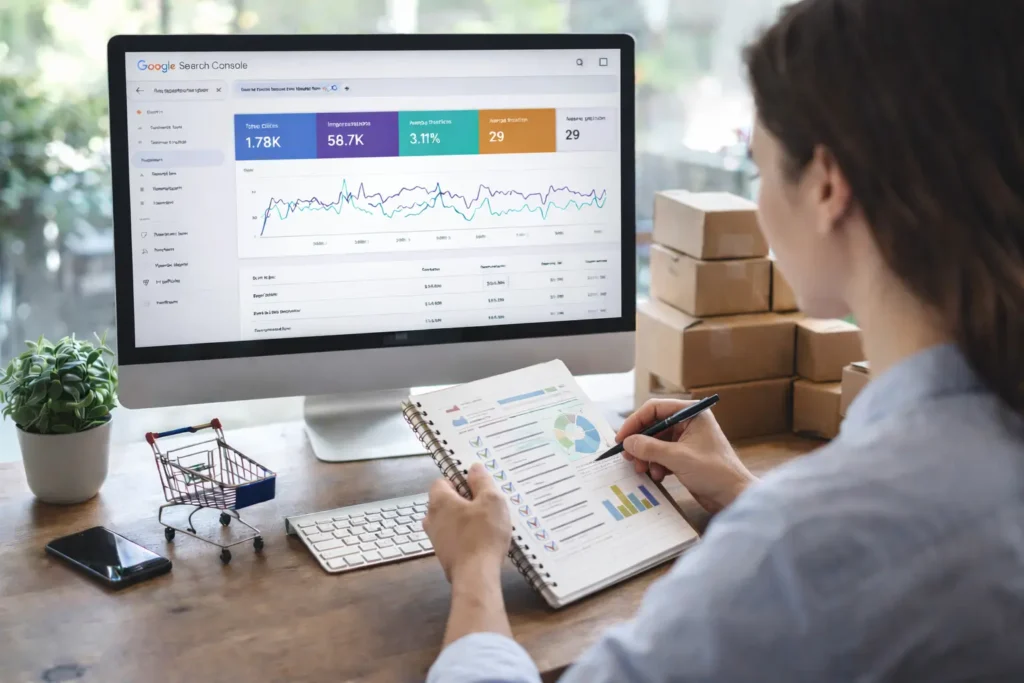
Google Search Console is one of the few free SEO tools that shows you what search engines see when they crawl your site. However, most store owners we work with at Click2Rank tell us that nine times out of ten, it reveals something they’ve completely missed.
Pair Search Console with a free SEO audit tool for on-page issues and a paid SEO checker for backlink analysis, and together they cover a lot of ground.
Each tool has a different job:
- Google Search Console: This free tool shows exactly which pages Google is indexing, which ones it’s ignoring, and why. It also breaks down organic traffic by page, so you can see where rankings are slipping and trace it back to a specific URL.
- Free SEO Audit Tool or SEO Checker: A free SEO audit tool like Screaming Frog or Ubersuggest scans your entire site for missing meta tags, broken links, and XML sitemaps that aren’t set up correctly. Most stores are surprised by how many issues come up on the first scan.
- SEO Audit Tool for Backlink Analysis: A paid SEO audit tool like Ahrefs or Moz Pro goes deeper, covering backlink profile analysis, toxic links, and keyword tracking across your site. For stores that have been live for a few years, this is usually where the more stubborn ranking issues trace back to.
Together, these tools cover everything a first e-commerce SEO audit needs.
Get Your E-commerce SEO Audit Right the First Time
A first e-commerce SEO audit rarely comes back clean. More often than not, stores turn up a mix of technical issues, on-page gaps, and duplicate content problems. And what’s worse, each one has a direct impact on organic search performance.
That’s exactly where Click2Rank comes in. Our team runs regular e-commerce and website SEO audit services that show you what’s broken, what’s underperforming, and what to fix first.
If you’re serious about getting your store to rank, we’ll help you run a proper e-commerce SEO audit and turn those findings into real improvements in organic search.
Let’s get your store where it should be.