
Amazon receives billions of visits each month, but most shoppers never scroll past page one of search results. This creates intense competition for visibility, where higher organic rankings directly drive more product views and purchases.
Amazon SEO services handle the optimization work required to reach those top positions without relying on ad spend. They improve product listings so the A9 algorithm surfaces your offers to shoppers already searching for what you sell.
But ranking there depends on conversion data Amazon tracks behind the scenes, not just the keywords visible in your listing.
What Are Amazon SEO Services?
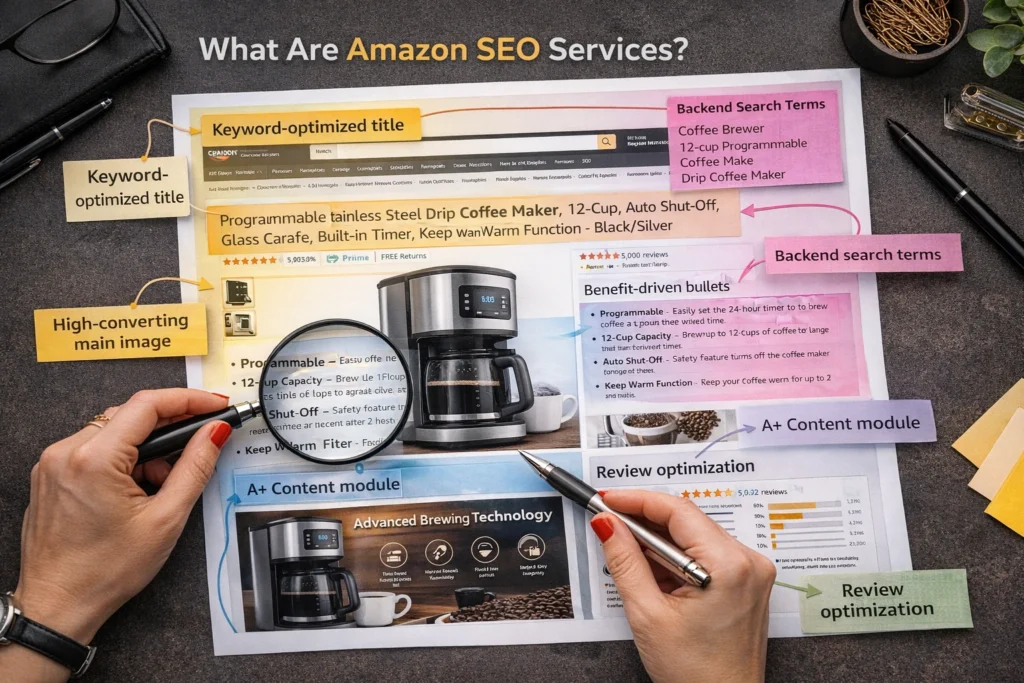
Amazon SEO services (Amazon Search Engine Optimization) improve how products appear and perform in Amazon’s organic search results. These services are typically delivered by copywriters, designers, and listing specialists who combine Amazon SEO knowledge with conversion-focused work like keyword research, listing optimization, and A content design.
You need specialized teams because Amazon’s ranking system is built around buyer behavior, not traditional SEO signals. Unlike search engines like Google, it doesn’t rely heavily on backlinks or domain authority. Instead, it prioritizes conversion signals such as click-through rates, sales velocity, and customer reviews.
In practice, this means Amazon SEO services do more than improve visibility. They align listings with both search intent and purchase intent, which helps products appear in relevant searches and convert more shoppers into buyers.
Core Components of Amazon SEO Services
Amazon SEO services consist of several core components, each responsible for a specific factor that influences visibility and conversions on the platform.
- Product Photography: Shoppers see your product image before reading a single word, so it should look professional and compelling. This includes lifestyle contexts showing real use cases, infographics highlighting key features, and close-ups answering common questions upfront.
- Copywriting and Keyword Research: Writers dig into which relevant keywords shoppers use when searching for products like yours. They weave those terms into titles, bullet points, and descriptions without making the copy sound robotic or stuffed.
- Competitor Research: Analyzing what top-ranking product listings do well reveals gaps you can exploit. Sometimes a competitor ranks high despite weak images or vague bullets, which tells you exactly where to outperform them.
- Backend Search Terms: Amazon lets sellers add hidden keywords that don’t appear on the listing but still help with search visibility. These catch misspellings, abbreviations, and alternative product names that shoppers search for.
- A Content and Brand Features: Sellers enrolled in Amazon Brand Registry get access to enhanced modules like comparison charts, brand stories, and detailed feature breakdowns. These sections improve listing optimization by giving shoppers more reasons to choose your product over alternatives.
Together, these elements drive performance. Strong images get clicks, persuasive copy converts browsers into buyers, and backend terms capture search traffic your visible content might miss. If even one component is missing, your listing underperforms against competitors who got all the pieces right.
How Amazon SEO Consultants Drive Sales Velocity
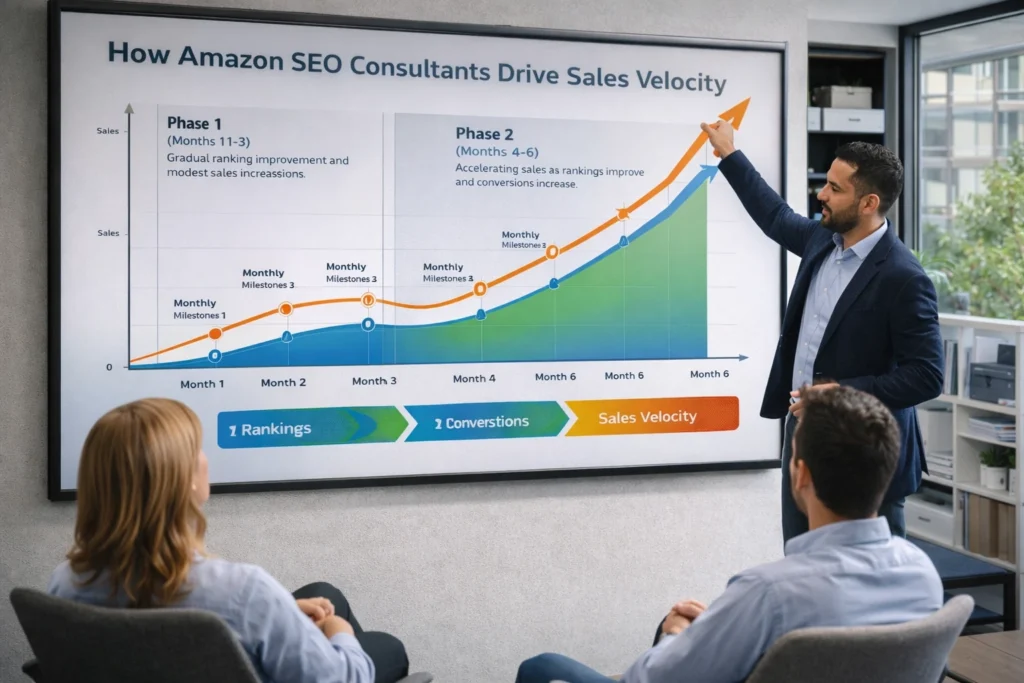
Amazon SEO consultants focus on two connected goals: ranking your products higher in search results and converting that traffic into purchases once you get there.
Ranking Higher in Amazon Search
Amazon SEO consultants start by identifying which keywords your products can rank for based on search volume and competition levels. They optimize titles and backend search terms to match those queries, then monitor where you show up in Amazon search results each week. Their goal isn’t just getting on page one but staying there as competitors adjust their own listings.
Converting Traffic Once You Rank
Once your listing appears in search results, consultants shift focus to conversion rate improvements. They A/B test main images to improve click-through rates, rewrite bullet points to reduce buyer objections, and add A content that answers pre-purchase questions. Each small conversion lift signals Amazon’s algorithm to rank you higher, which brings more traffic and drives sales through the compounding effect.
Amazon Agency Options: Full-Service vs Specialist

The right fit depends on whether you need deep Amazon expertise or coordination across multiple sales channels.
| Provider Type | What They Offer | Best For |
| Freelancers | Lower rates, direct communication, individual expertise | Small budgets, single-product launches, and sellers who can manage timelines |
| Amazon SEO Agency | Platform-specific knowledge, team depth, proven case studies | Sellers focused solely on Amazon marketplace growth |
| Full-Service Marketing Agency | Multi-channel coordination, broader digital marketing strategy | Brands selling on Amazon, plus their own e-commerce site |
Each option solves a different stage of growth, so the trade-offs are more important than pricing. For example, freelancers work well for testing small campaigns or tight budgets, but most sellers eventually outgrow that model.
By contrast, specialist Amazon SEO agencies make sense if you sell exclusively on the platform and need to outrank established competitors. They deliver faster results because they’ve already solved similar ranking challenges in your category.
Full-service agencies work better if you also run your own e-commerce site, since they coordinate SEO and messaging across both channels without creating inconsistencies. The same applies to SEO for financial services, where providers need to balance search visibility with regulatory and compliance requirements.
Pro tip: Choose based on where you are now, not where you plan to be a year from now. Most sellers start with freelancers and move to specialists or full-service agencies as complexity increases.
Build Maximum Visibility With the Right SEO Strategy
Before hiring any Amazon SEO services, verify they’ve ranked products in your specific category. Amazon’s algorithm treats electronics differently from home goods, so a generic SEO experience doesn’t translate. It’s better to ask for proof of ranking improvements in your niche, not just broad claims about traffic growth.
The right SEO strategy focuses on sustainable growth rather than short-term wins that disappear after the next algorithm update. That means treating product listings as ongoing work, since competitors continuously adjust and Amazon updates its ranking signals.
If you need a team that applies this approach consistently, Click2Rank’s services focus on category-specific optimization and continuous testing rather than one-off changes. This ensures your listings improve steadily over time instead of relying on short-lived ranking gains.