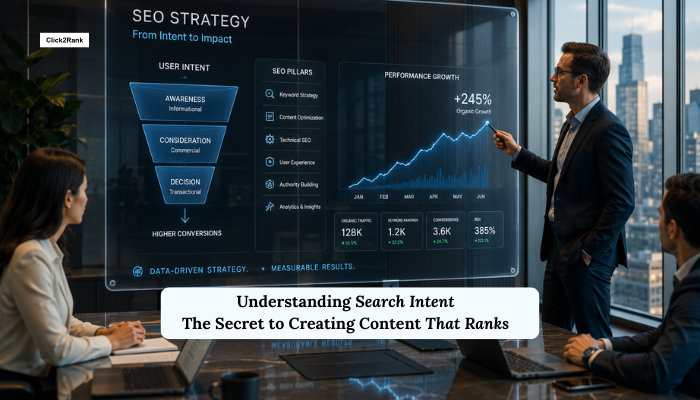
Ever wondered why some articles climb to the top of Google while better-written ones never crack the top ten? Nine times out of ten, the difference is search intent. That gap is what search intent SEO closes. You figure out what a person wants when they type a search query, then you hand it to them. We’re Click2Rank, and we’ve built a lot of ranking wins on that one habit.
In this guide, we’ll cover the four main types of search intent and how to read them straight from a keyword. Then we’ll show you how to plan content around what you find. Ready? Let’s jump in.
What Is Search Intent?
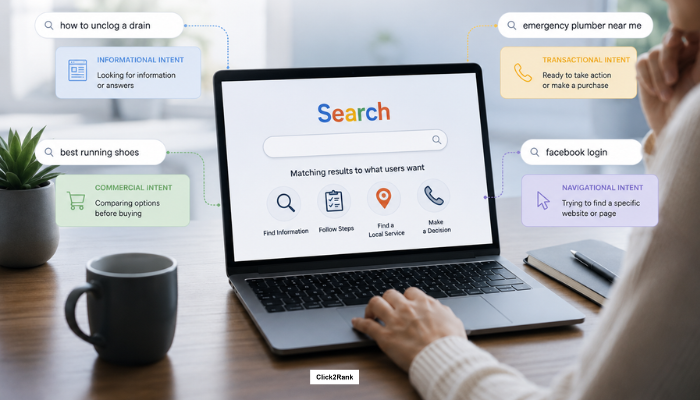
Search intent is the reason behind search queries: what the person wants to happen after they hit enter. Someone searching “how to unclog a drain” wants steps they can follow right now. The person typing “emergency plumber near me” wants a phone number.
Search engines like Google take that difference seriously. Google wants happy searchers, so it watches which results people click, which ones they like best, and rewards the best match for each query. Serve the wrong content, and you will slide, no matter how polished the writing is.
Think of it like a barista taking orders. If a customer asks for a flat white and you hand over green tea, they will walk out. Searchers behave the same way when a result ignores what they came for.
The Four Intent Buckets, With Examples
Nearly every keyword maps to one of four search intent types, and each one calls for its own format. Here are the four buckets we sort keywords into before writing a word:
- Informational Intent: The searcher wants to learn something. Queries sound like “what is schema markup” or “how do backlinks work.” Blog posts, guides, and tutorials serve this group best. It is easily the largest bucket of the four.
- Brand-Seeking Intent: These users already know where they want to end up, and they know exactly what they’ll find there. Queries such as “Facebook login” or “Click2Rank blog” point at a specific website. Unless the destination is your own brand, they’re rarely worth chasing.
- Commercial Intent: Here, the person is comparing options before spending money. Modifiers such as “best,” “review,” and “vs” give it away. Comparison posts and buying guides win these clicks.
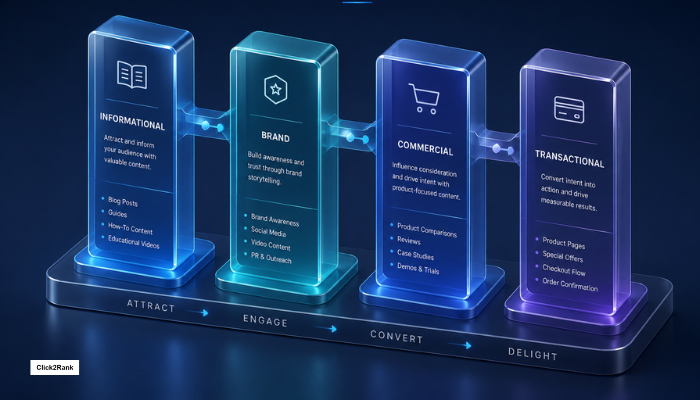
- Transactional Intent: Wallet out, ready to make a purchase. Queries carry words like buy, order, and coupon. Product pages and focused landing pages close the deal here, and a clean checkout keeps the conversion rate healthy.
One keyword, one bucket, one format. Get that pairing right and everything else in this guide gets easier.
Why Search Intent Is Important for SEO
Google has spent two decades learning to read user intent, and its ranking systems reward the content that satisfies it. Pages that answer the intent rank higher in search results. For proof, watch your own habits: when a result wastes your first ten seconds, you hop back and choose the next one. That hop counts as a no vote, and enough of them will sink a ranking.
We see this all the time: a plain page that nails the intent users arrive with will outrank a beautiful one that misses. Users expect the page to match the promise of the snippet. High bounce rates in Google Analytics usually point to the gap between the two.
There’s a compounding benefit as well. A search engine only wins when its users leave happy, so good user experience earns better engagement signals, links, and repeat visits. Rankings follow. (We’ve watched this play out on our own blog more times than we can count.)
How to Determine Search Intent From Keywords
The fastest way to read a keyword is to run the search yourself. Search your target keyword and study the top results. If the first page of results is all guides, the searcher wants to learn. A wall of category and product listings means money is on the table. Featured snippets, shopping carousels, and other SERP features Google displays are clues too.
Keyword modifiers tell you plenty on their own. Words such as “how,” “what,” and “guide” mark informational queries. “Best,” “top,” and “review”? Those are commercial queries. And when “buy,” “price,” or “near me” shows up, you’re looking at transactional queries, typed moments before someone spends.
Plenty of SEO search intent advice stops at the eyeball test, but data can settle close calls. SEO tools like Semrush and Ahrefs label keyword intent right next to search volume, and they agree with the SERP more often than not. We’ve done this enough times to know the SERP never lies. When a tool disagrees with it, trust your own eyes.
How to Match Content to Keywords
Once you know what the searcher wants, the next job is to match content to keywords deliberately. Format comes first. Before you optimize your content for search intent, look at the type of content already winning that query and follow its lead. An informational keyword usually deserves a blog post walking through the steps. A transactional keyword deserves a product page.
The goal is to create content that matches the SERP, then beat it on depth, clarity, and proof. Keep the topic and the content type, and out-answer everyone: more specifics, clearer steps, better evidence.
We’ve been there too: we once aimed a hard-sell landing page at a comparison keyword and watched it stall for months. A rewrite into an honest comparison post cracked page one within weeks. The format was the only change, and the user noticed before the algorithm did.
Building an SEO Content Strategy Around Intent
Intent is what separates a publishing schedule from a plan built around user goals. Start with keyword research, then group the relevant keywords by intent before you brief a single post. You only need to figure out intent once per keyword, and the label tells you exactly what to build.

Informational content feeds your blog and wider content marketing, and it builds the audience you’ll sell to later. Save the commercial and transactional terms for the pages that sell your products or services.
From there, make sure every web page owns exactly one intent. Write the title tag and meta description so your promise is obvious in the search results. Sharp meta descriptions do half the selling before the click. Then let readers sign up or buy without hunting for the button. That’s intent optimization at its simplest: every query gets one page with one goal.
An intent-first SEO strategy keeps teams honest too. If a draft can’t name the user it serves or the question it answers, it isn’t ready to publish. That single rule beats most of the generic SEO best practices we’ve seen.
Quick FAQs
What is search intent in simple terms?
It’s the goal behind a search: to learn (that one’s an informational query), to compare options, to buy, or to find specific sites. Match what you publish to that goal and you will rank far more often than you miss.
Can one URL target two intents?
Rarely. Different intents attract different types of visitors. A post that tries to teach and sell at the same time usually does neither well, so users bounce. Split the jobs across two linked posts instead.
How often does intent change?
More often than most people expect. The algorithm rereads intent as searcher behavior shifts, so recheck the SERP for your money keywords every few months. Ten minutes of intent analysis per quarter will save you from slow ranking slides.
Match the Intent and Watch What Happens
Every search is a request, and rankings go to the pages that read the request correctly. Now that you know the basics, pick ten of your target keywords and label each one’s intent. Then check that what you’ve published delivers what those searches are asking for. You will spot the gaps quickly.
And if you’d rather have a team that does this every day, we can help. Click2Rank builds intent-mapped content plans, then writes the pages to fill them. Get in touch and we’ll show you where your quickest wins are hiding.