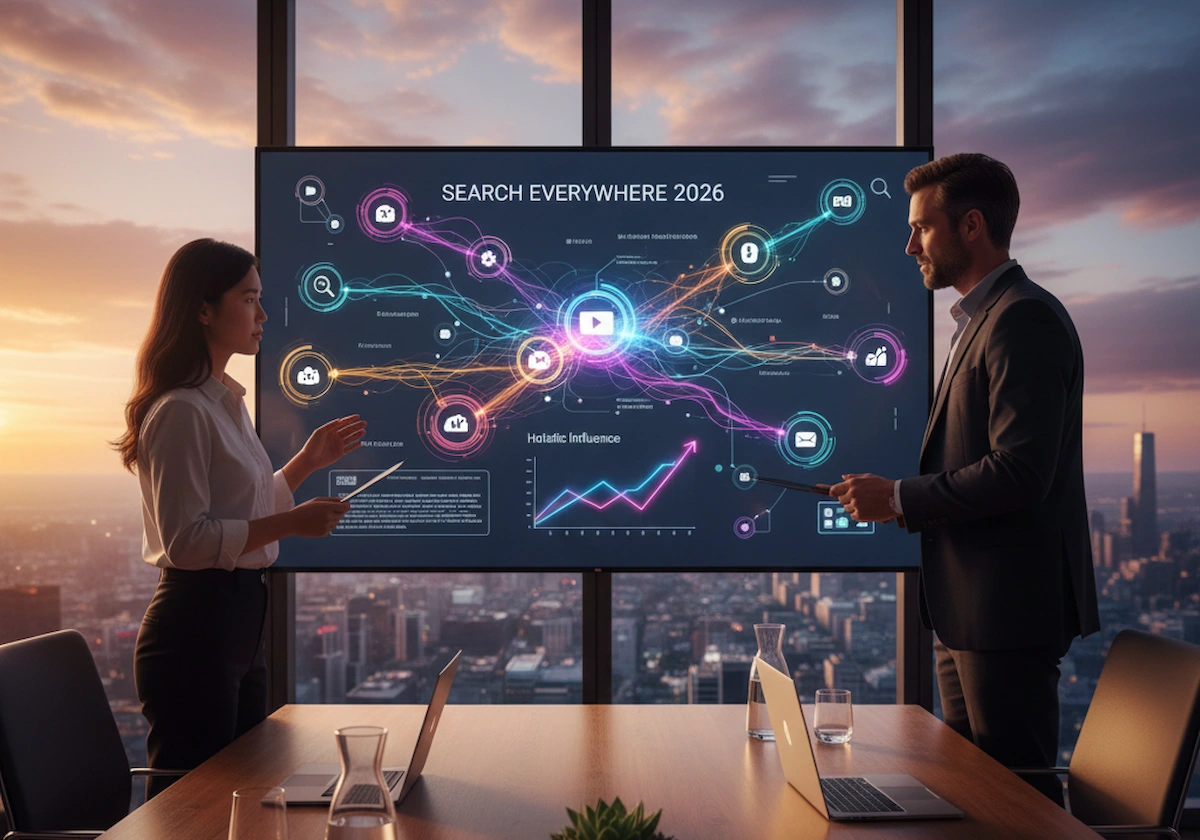
SEO strategies are shifting faster in 2026 because AI adoption has created a series of effects where each change triggers multiple new developments simultaneously. In fact, AI tools keep influencing how people search, which forces Google to respond. And it changes how people search again.
At Click2Rank, we’ve been noticing these changes with our clients every day. We know what’s working right now and what stopped working a few months ago.
In this article, you’ll learn why SEO changes so fast nowadays and how that impacts your search strategy. We’ll also discuss exactly how people search differently, plus what Google is doing in response.
Read on to learn more about these rapid SEO transformations.
Why SEO Changes Are Speeding Up (Not Just Changing)
SEO changes are accelerating as AI is reforming how web search engines process information and how users search. Also, instead of isolated updates, shifts in algorithms, AI-driven features, and information-seeking behaviors now happen together.
In February 2025, ChatGPT surpassed 400 million weekly active users, which was a huge milestone in its rapid growth. Meanwhile, Google’s global search market share dipped below 90% for the first time in years.

It’s a clear reflection of the increased use of AI-powered alternatives like ChatGPT and other tools.
The process of update implementation changed as well. For example, when ChatGPT launches a new search feature, users try it, and their habits change. Google notices this change and updates its algorithm to compete. ChatGPT then adds another feature.
This cycle repeats, except faster each time.
But there’s something bigger happening. Rather than just using Google all the time, people now search on TikTok for quick answers, Reddit for honest opinions, and ChatGPT for research. These platforms rank content differently while influencing each other (signals now travel across ecosystems).
For instance, the moment a TikTok video goes viral, people Google those topics. Also, if Reddit threads rank high in Google search results, it changes what Google considers authoritative. And when AI tools cite the same sources repeatedly, those sources indirectly become more trustworthy everywhere on the internet.
As you can see, the whole thing forms a feedback loop. That’s why every algorithm change creates new user behavior, and it triggers the next update even faster.
Based on our findings, take a look at this table to have a better understanding of the changes:
|
Traditional SEO (Pre-2024) |
2026 SEO Reality | |
|
Goal |
Rank #1 on Google |
Get cited everywhere |
|
Traffic Source |
Google clicks |
Multi-platform visibility |
|
Success Metric |
Keyword rankings |
Brand mentions and citations |
|
Focus |
On-page optimization |
Cross-platform authority |
|
User Journey |
Google → Your site |
TikTok → Reddit → AI tool → Maybe your site |
|
Algorithm Updates |
2-3 per year |
Constant across all platforms |
What Major Forces Are Changing Search Right Now?
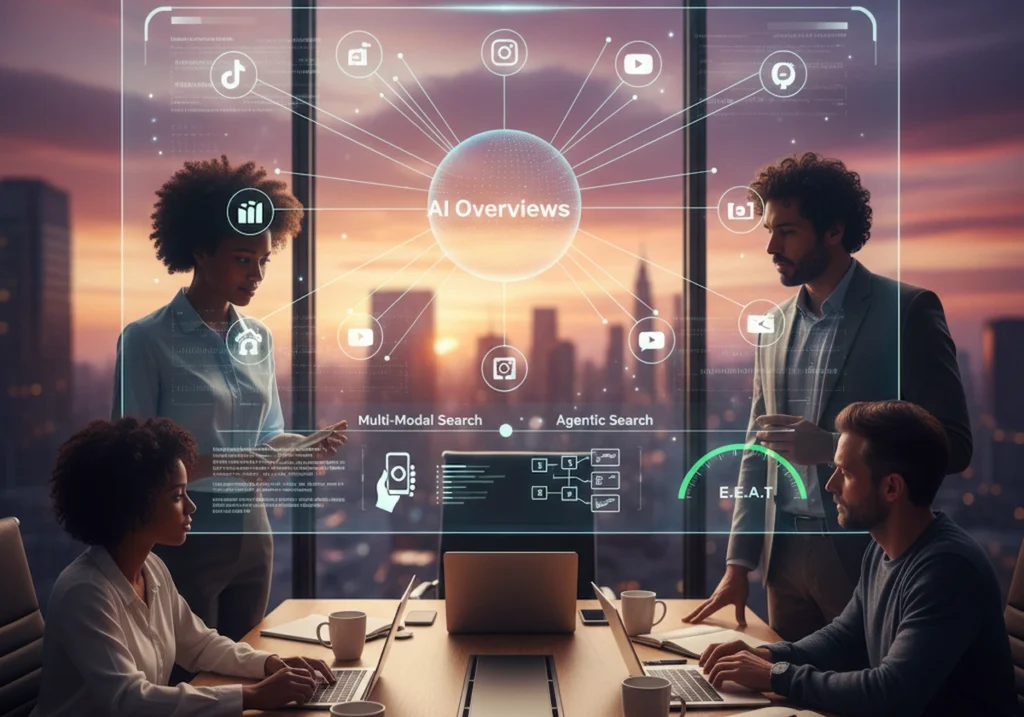
The major forces changing search right now are AI tool fragmentation, agentic AI systems, third-party citation priorities, and stricter E-E-A-T standards. These fundamentals change how people find information, how search behaviors evolve, and how search engines decide what to show.
Here’s how these elements work:
- Multi-Platform Search: We mentioned earlier that users now search on TikTok, Reddit, and ChatGPT instead of just Google. Each platform uses different ranking factors, and it makes understanding information-seeking habits more important for businesses.
- Agentic AI: AI agents can now book services without users clicking links. For example, with Google’s AI Mode, the search process happens automatically. So if you use structured data, it helps these systems understand and recommend your business easily.
- Third-Party Citations: Reddit discussions often influence AI-generated content by surfacing real opinions. And when that happens, user-generated content helps search engines judge credibility. Meanwhile, brand mentions across the internet can build stronger authority than relying only on your own site.
- Stricter E-E-A-T: Google is now better at evaluating AI-generated content, especially when it lacks original insight or personal experience. That’s why content that reflects genuine expertise and real-world knowledge tends to perform better.
All of these shifts point to one reality: SEO professionals must optimize for how users actually discover, trust, and choose content today.
How Is Google’s Algorithm Responding to These Changes?
Google’s algorithm is responding to these changes by prioritizing entity relationships through its Knowledge Graph and rewarding content optimized for generative AI citations.
The old playbook of keyword optimization isn’t working anymore. Rather, Google now looks at how your brand connects to broader topics, plus whether AI systems can easily pull information from your content.
Let’s get into more detail about these adjustments.
Knowledge Graph Prioritizes Entity Relationships
Did you know Knowledge Graph connections can help a brand appear in AI-driven responses even without traditional ranking positions? This is because Google links entities and topics across the World Wide Web, and it strengthens how information is understood and surfaced.
Say you run a Seattle coffee roaster. Google links your business to “specialty coffee,” “Pacific Northwest roasters,” and “small-batch beans.” These entity relationships decide whether you show up in featured snippets (and it helps match content to intent).
Put simply, search engines get the bigger picture now. They understand how topics connect instead of just which keywords you stuffed into your content.
Generative Engine Optimization Replaces Traditional SEO
Top-ranking pages can still lose traffic while lower-ranked sites appear in AI overviews and citations. That’s because AI systems don’t rely only on traditional search rankings. Even pages beyond the first search results can be surfaced, so a top position no longer guarantees visibility.

Here’s a real example. A small accounting firm ranked #12 for “tax deductions,” yet ChatGPT cited their content. Why? They answered specific questions using clear data. Meanwhile, the top result was skipped because it was built for traditional SEO.
Bottom line: Old tactics alone no longer support traffic growth.
Ready to Future-Proof Your SEO Strategy?
Let’s recap. The SEO strategies that worked last year won’t work in 2026. Search is fragmented across multiple platforms, while AI tools have changed how people find information. And Google’s algorithm now rewards brands that show up everywhere.
So, you need to build authority across TikTok, Reddit, and AI platforms. We highly recommend adding structured data so AI models understand your business. Also, don’t forget to create content that demonstrates your own experience.
We specialize in helping businesses adapt to these changes. Our team stays ahead of algorithm updates and multi-platform strategies, so you don’t have to. Contact us today for an SEO audit.